
Written by

Featured Video
Table of Contents
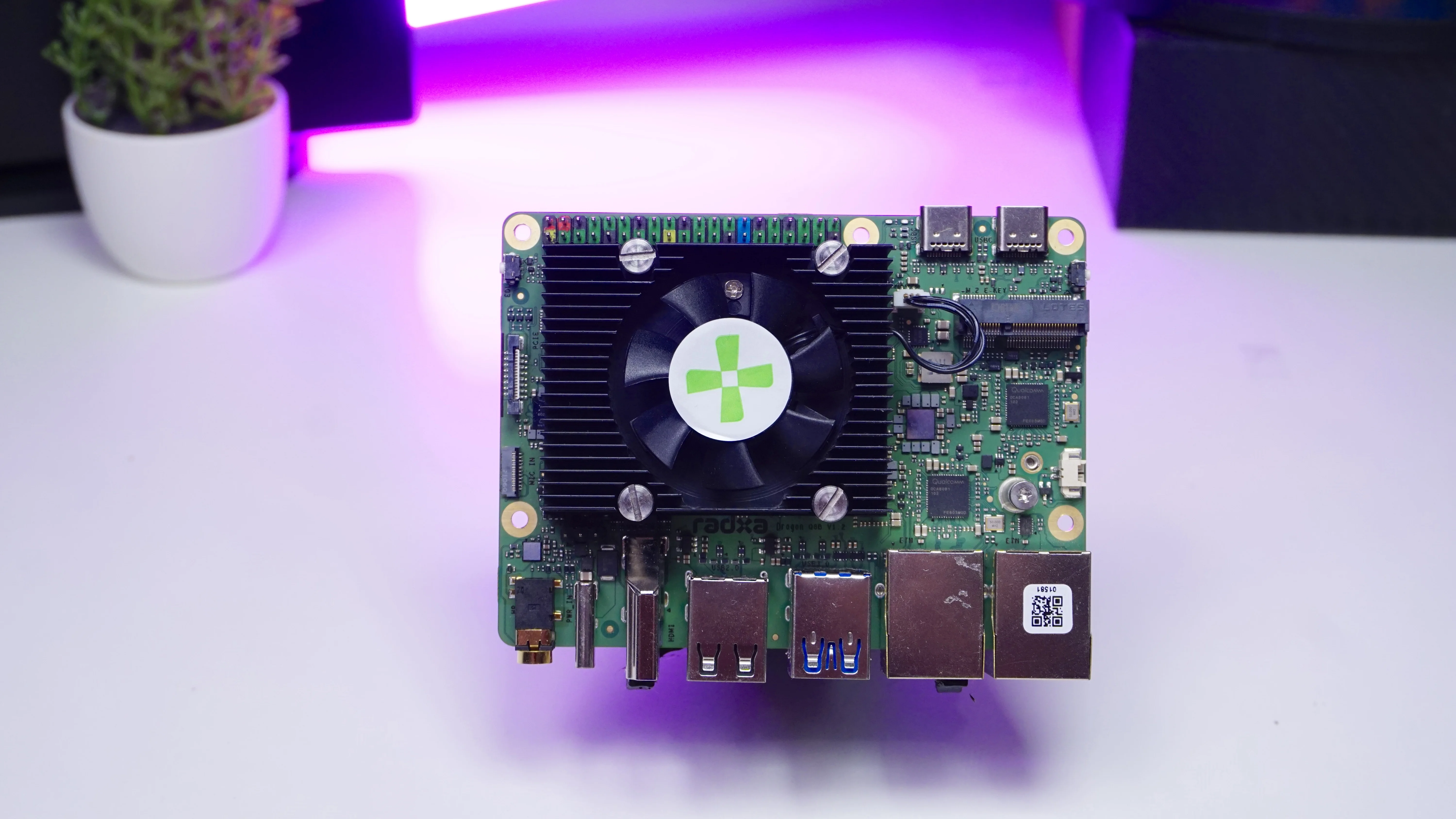
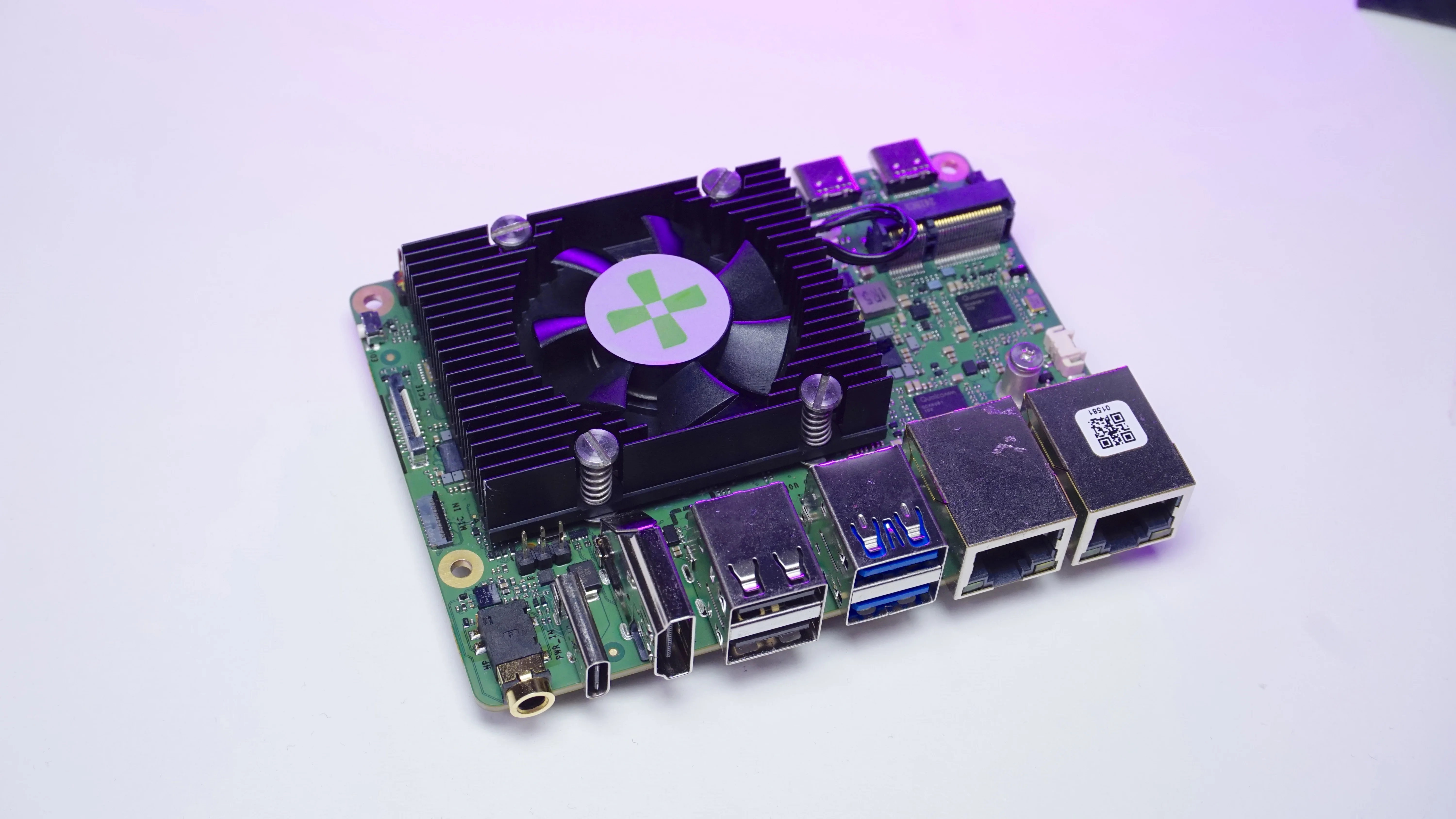
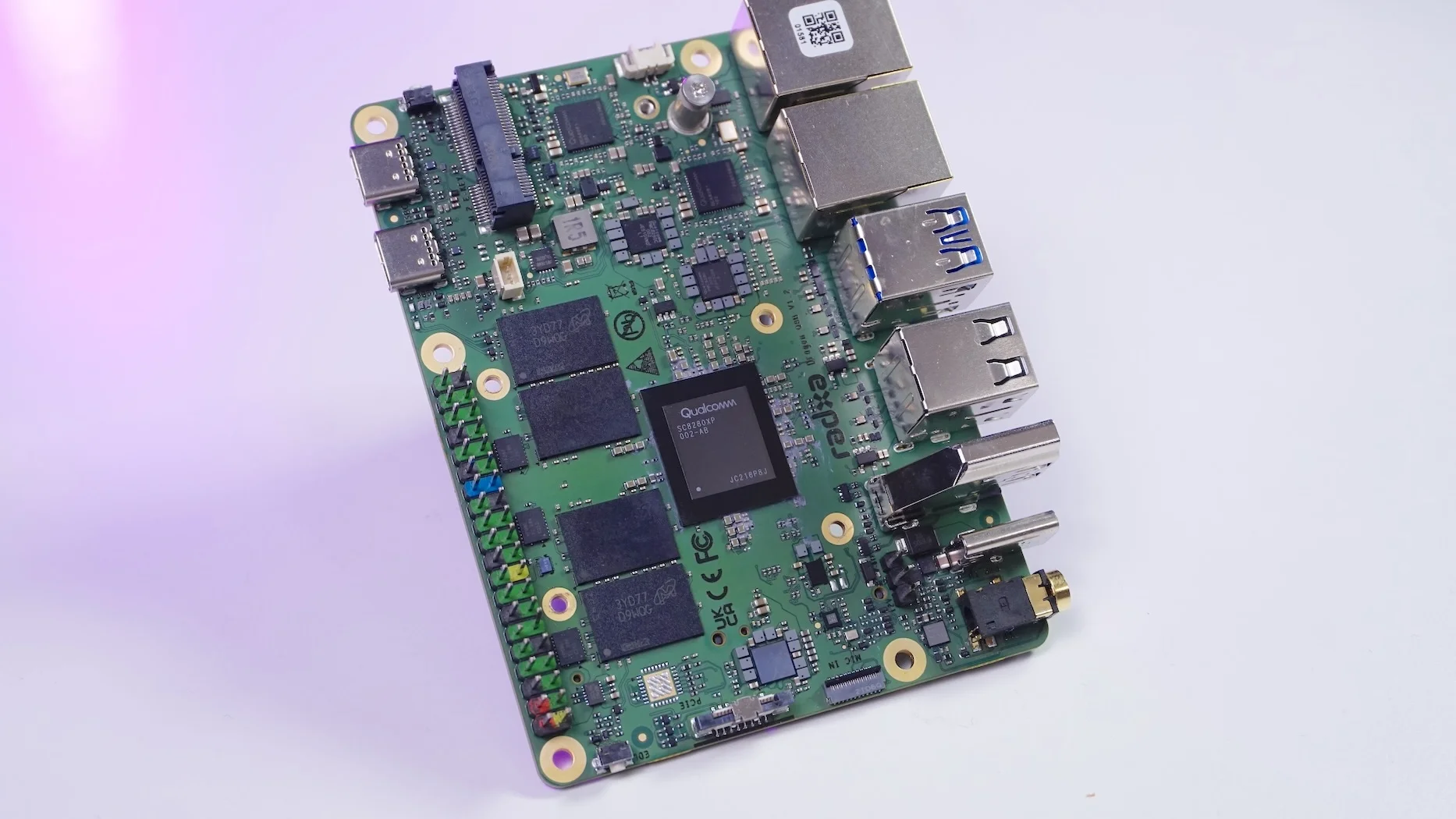
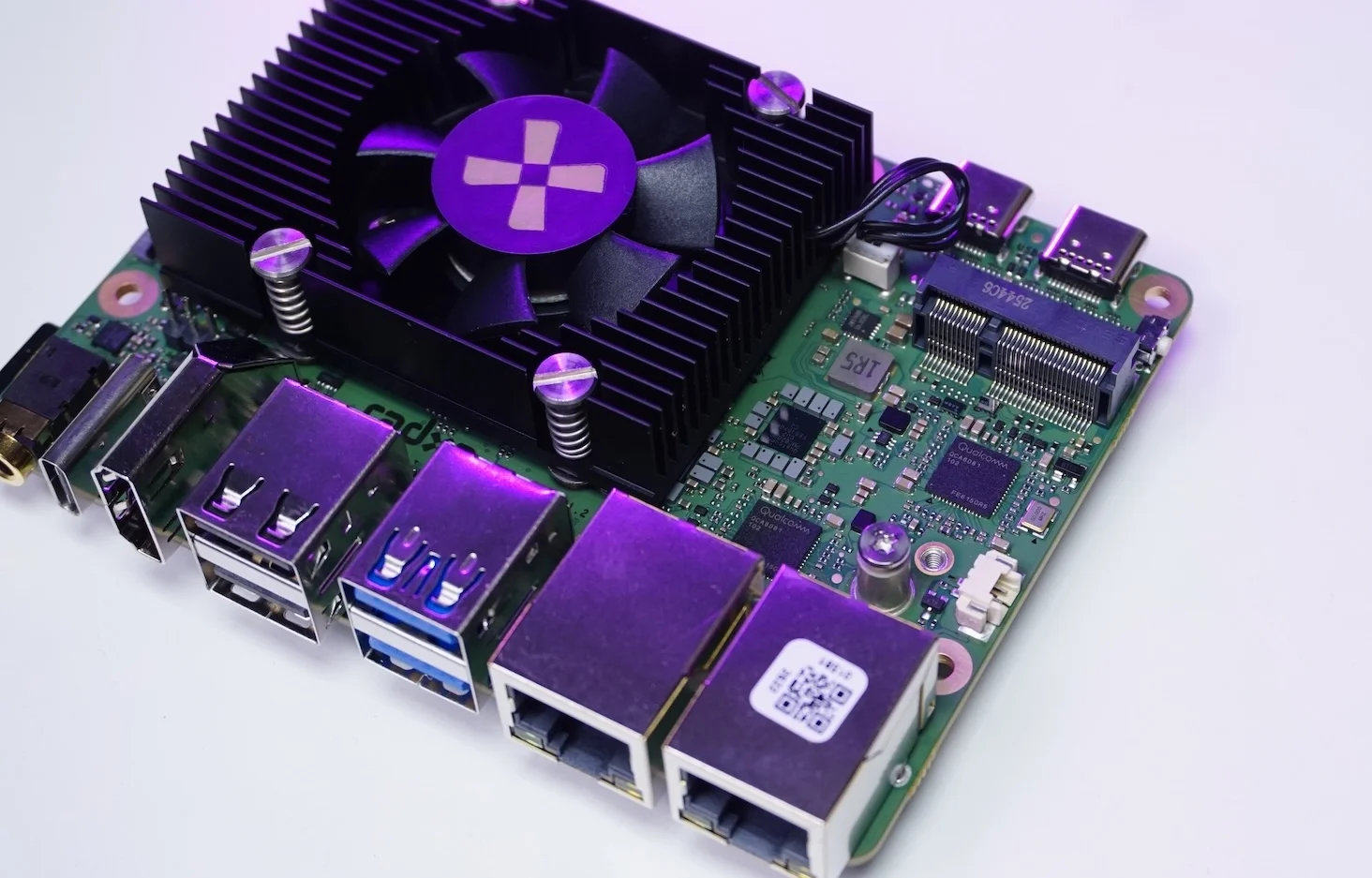
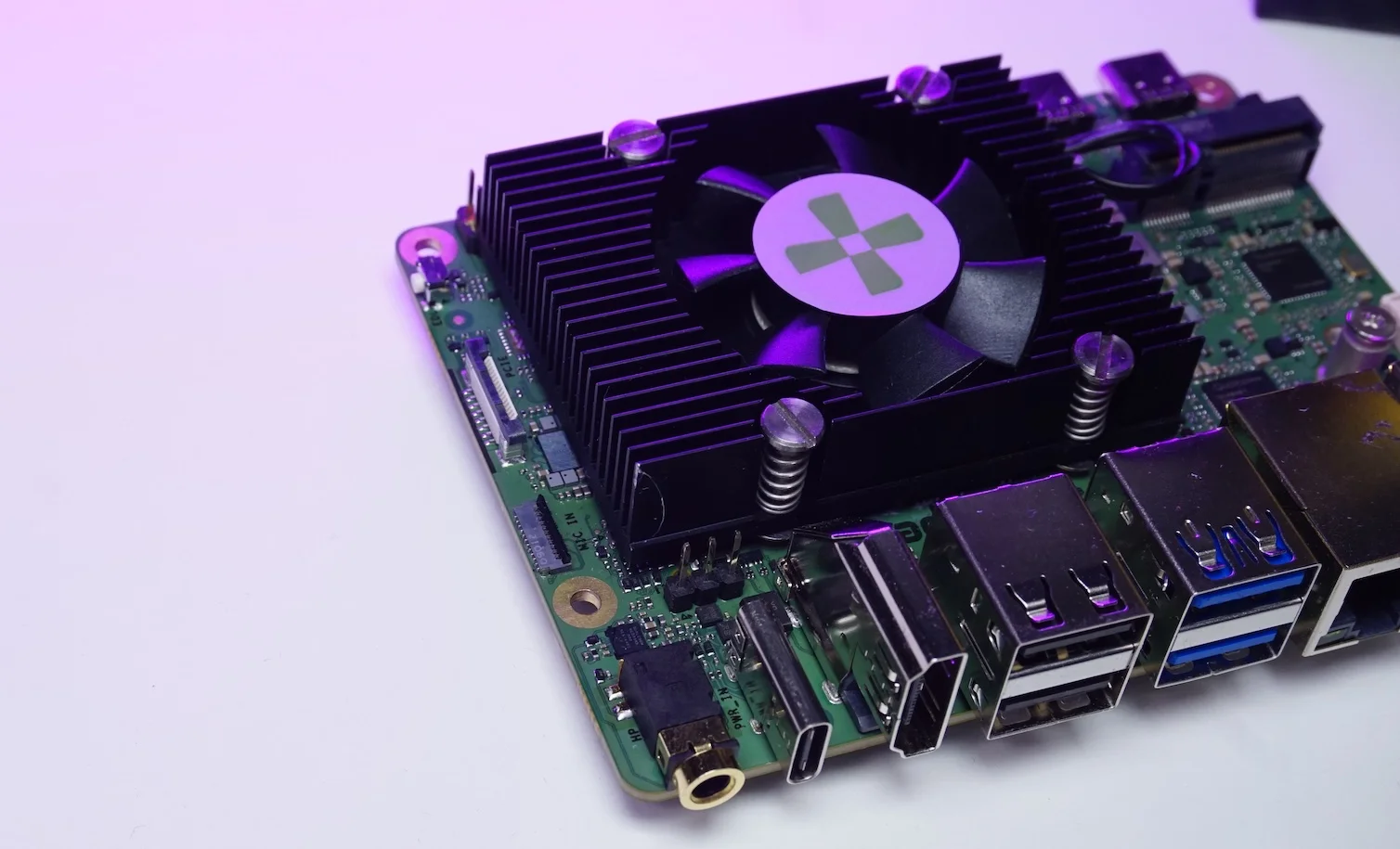
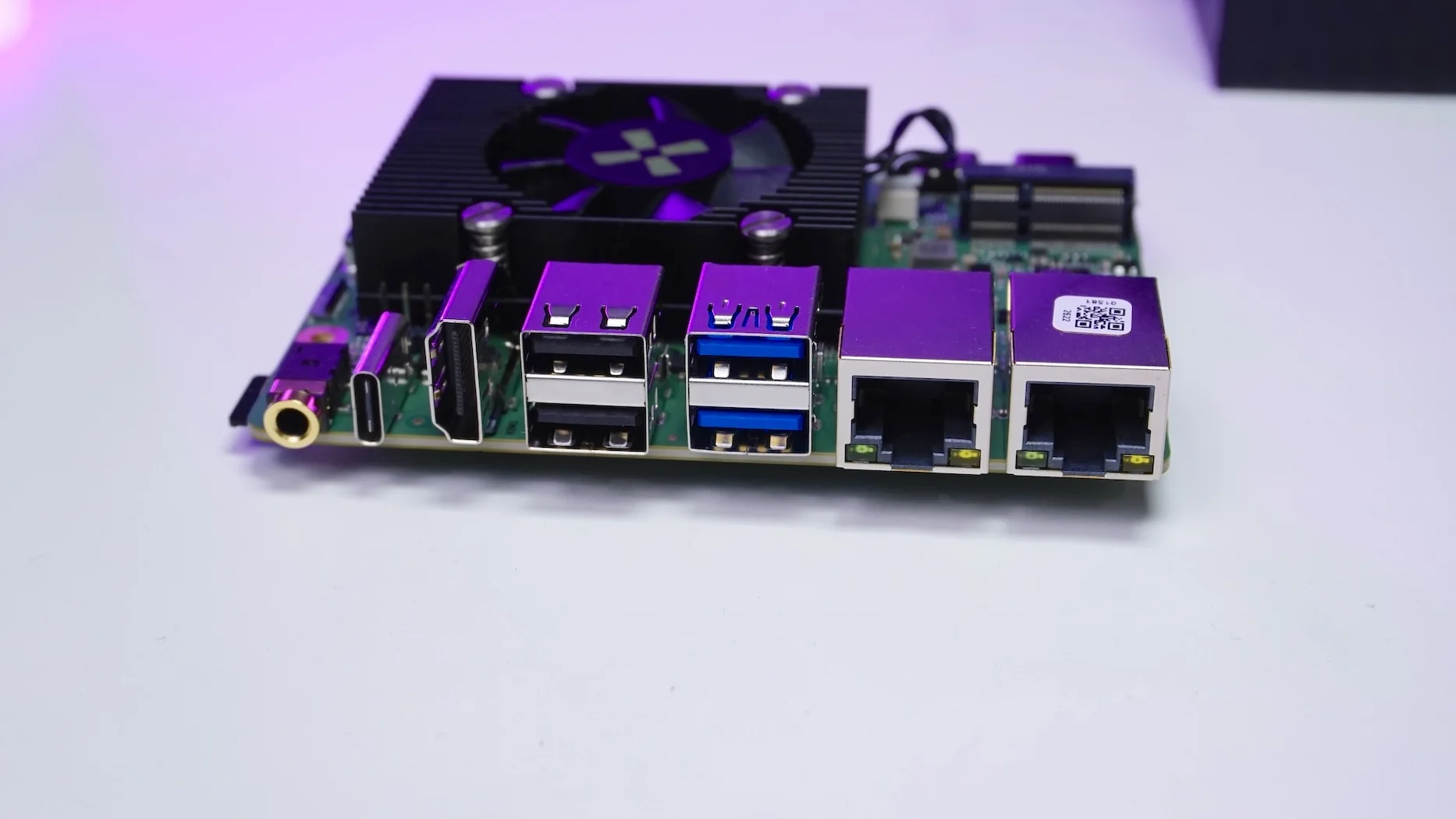
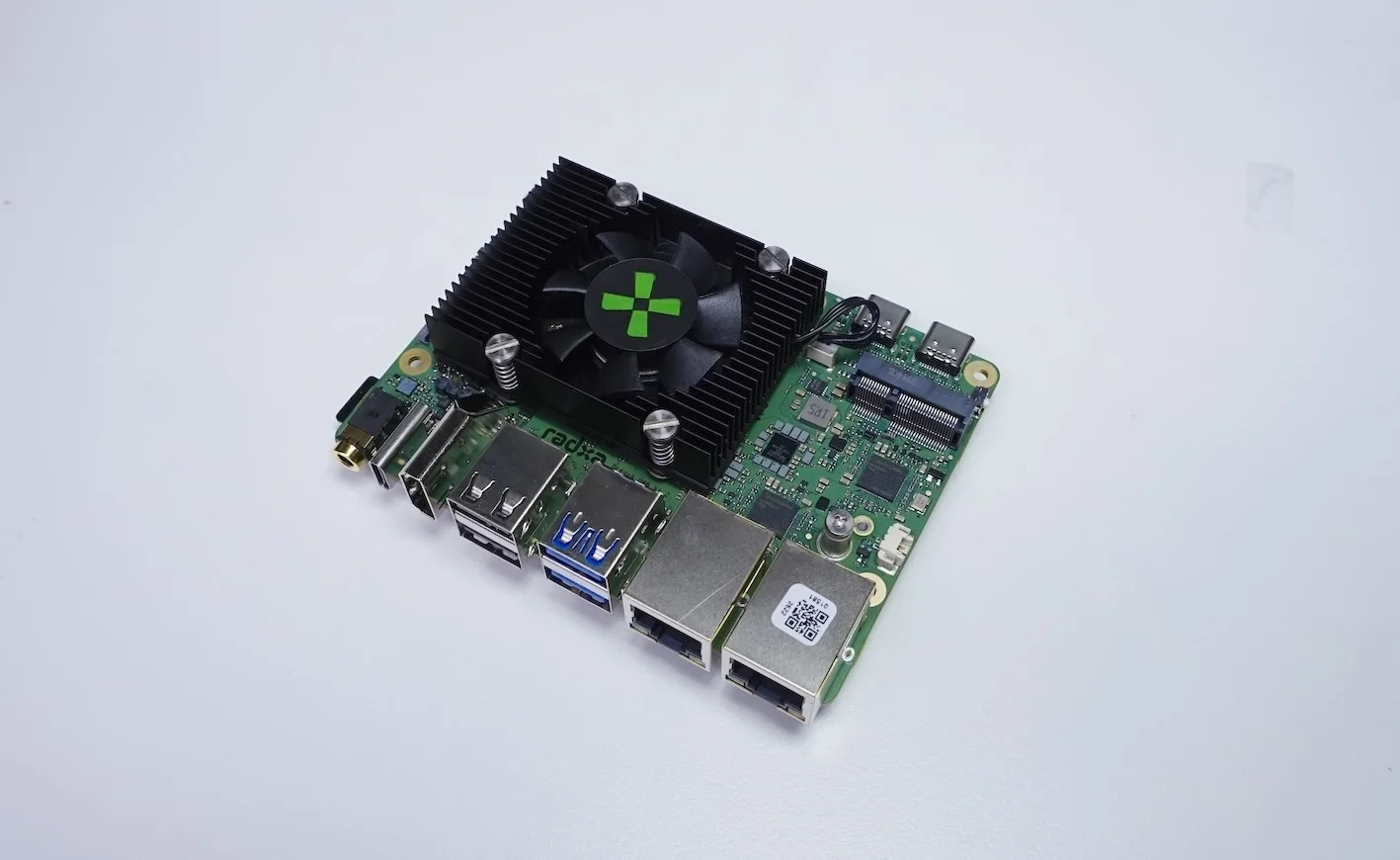
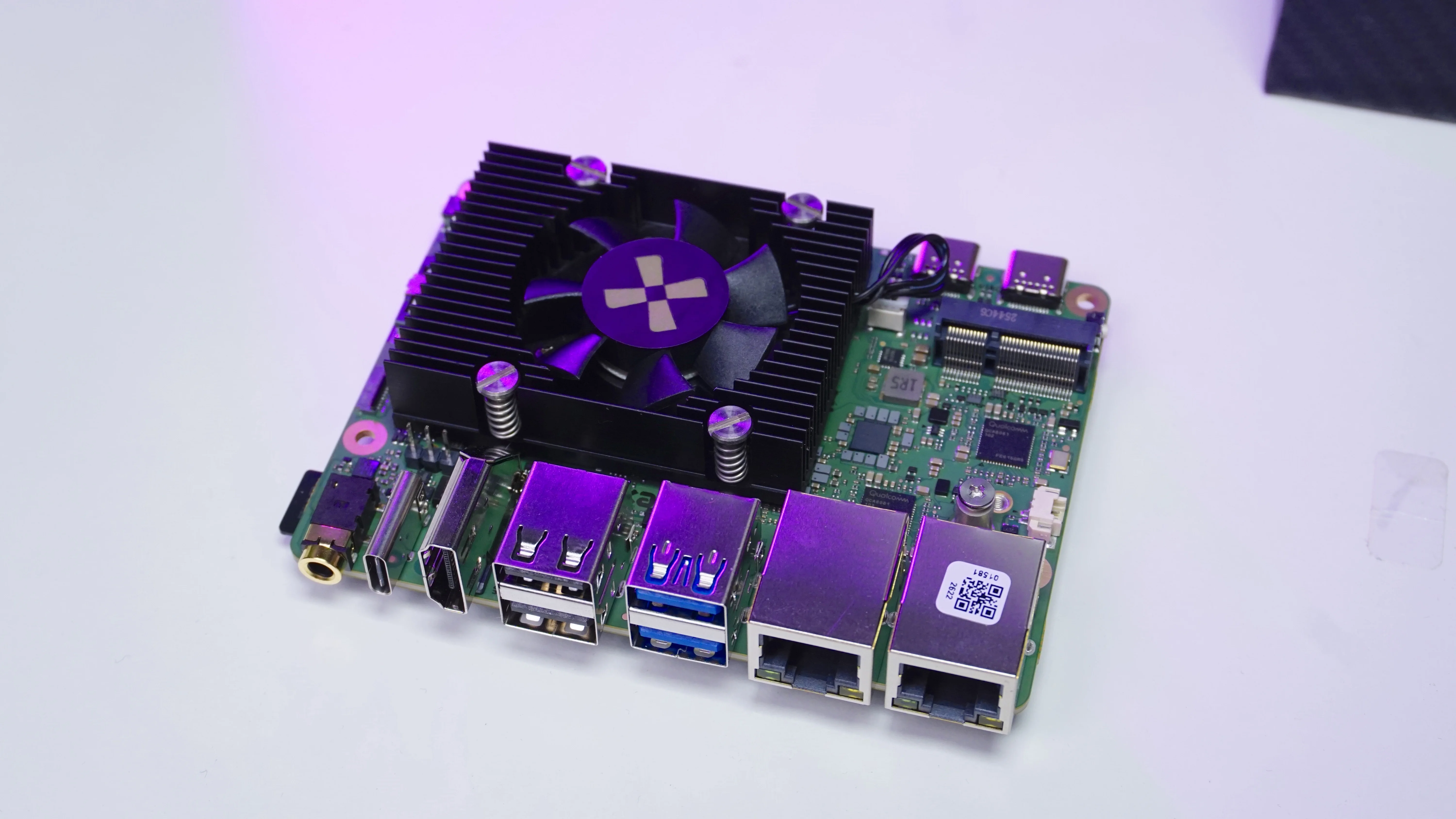
If you are looking for a powerhouse Single Board Computer (SBC) that rivals the Raspberry Pi 5, you need to check out the new Radxa Dragon Q8B.
Powered by the Qualcomm Snapdragon 8cx Gen 3 CPU, this board is built for heavy multitasking, lightning-fast storage, and running local AI models right out of the box. Today, I'll walk you through its core specs, performance benchmarks, and local AI capabilities so you can see exactly what this beast can do.
Buy Radxa Dragon Q8B:
Technical Specification
Smooth Operating System & GPU Performance
Radxa provides a customized, Ubuntu-based OS running on the latest Linux 7.0 kernel. Out of the box, the GPU drivers are fully ready to utilize the Qualcomm Adreno 690 GPU.
-
Hardware Video Decoding: Flawless. Running 1080p and 4K YouTube streams in Firefox resulted in zero dropped frames.
-
OpenGL Support: GLmark2 scored ~5,844 (nearly twice the score of the Radxa Dragon Q6A).
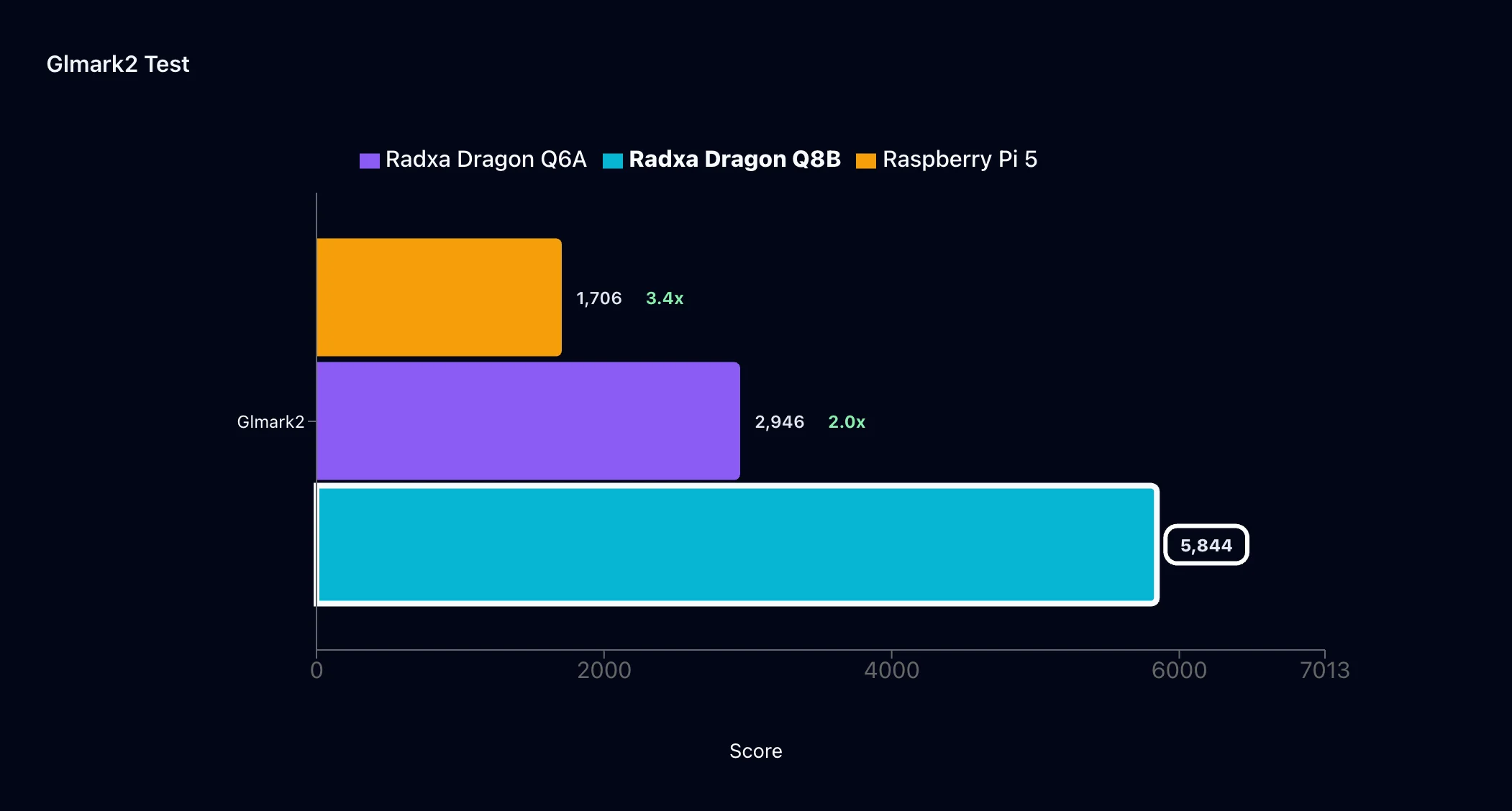
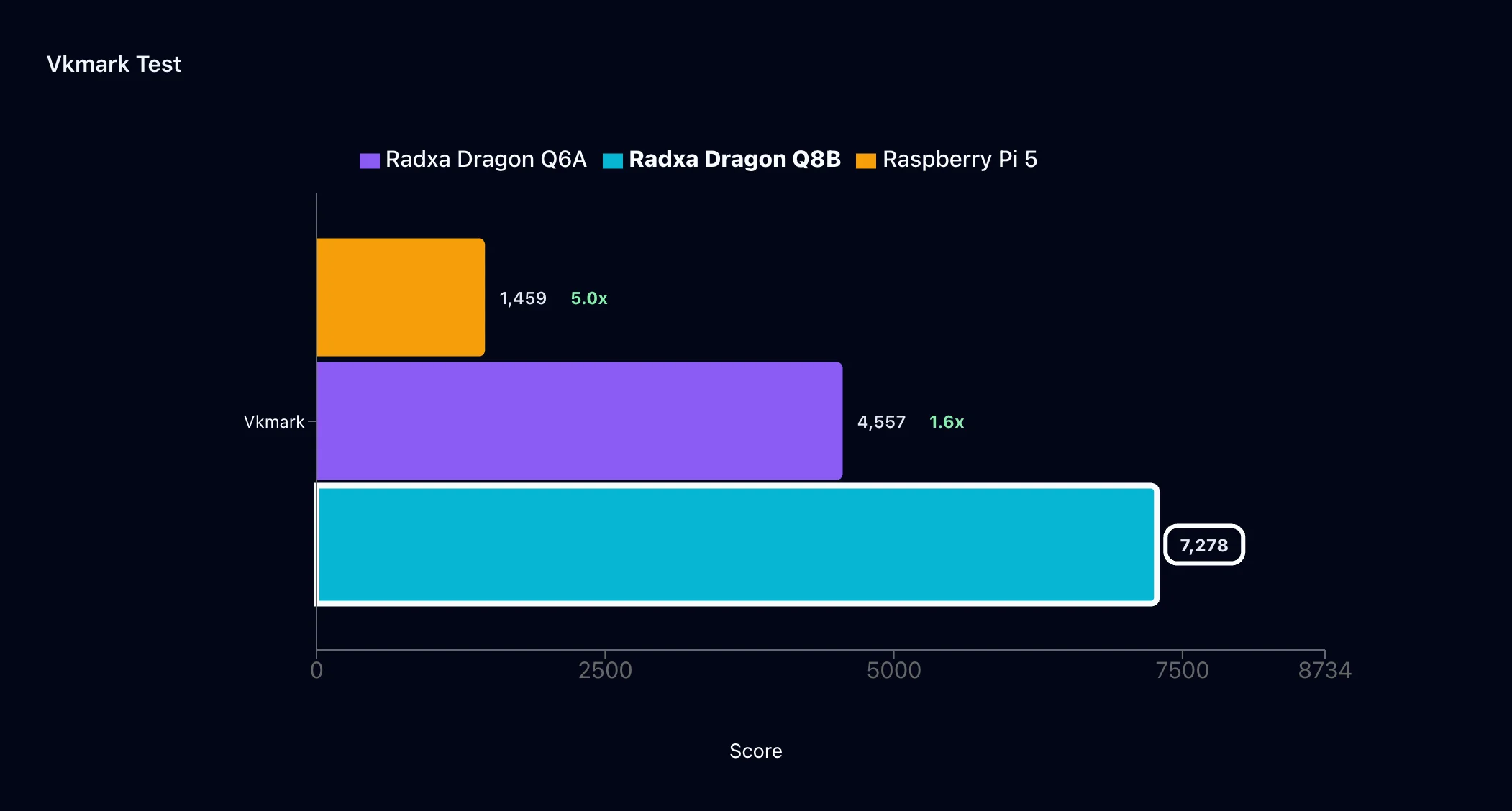
- Vulkan Support: VKmark tests scored 1.6 times higher than the Q6A.
Blazing Fast CPU & Memory
You want raw processing power? The Dragon Q8B delivers.
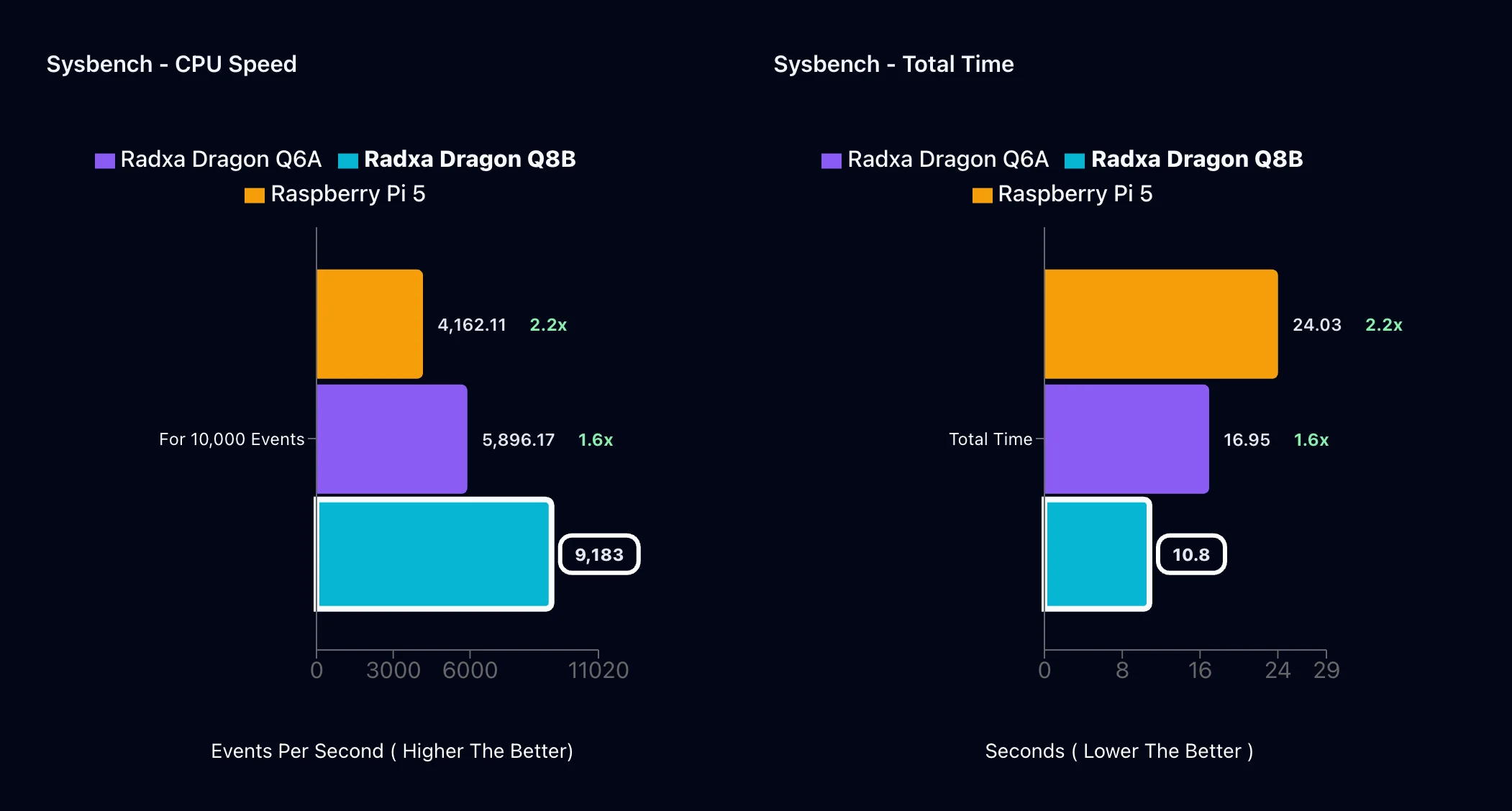
- Sysbench: Calculated prime numbers up to 20,000 in just 10 seconds, processing ~9,100 requests per second. (6 seconds faster than the Q6A).
- Geekbench: High single and multi-core scores. Multi-core performance doubled that of the Q6A.
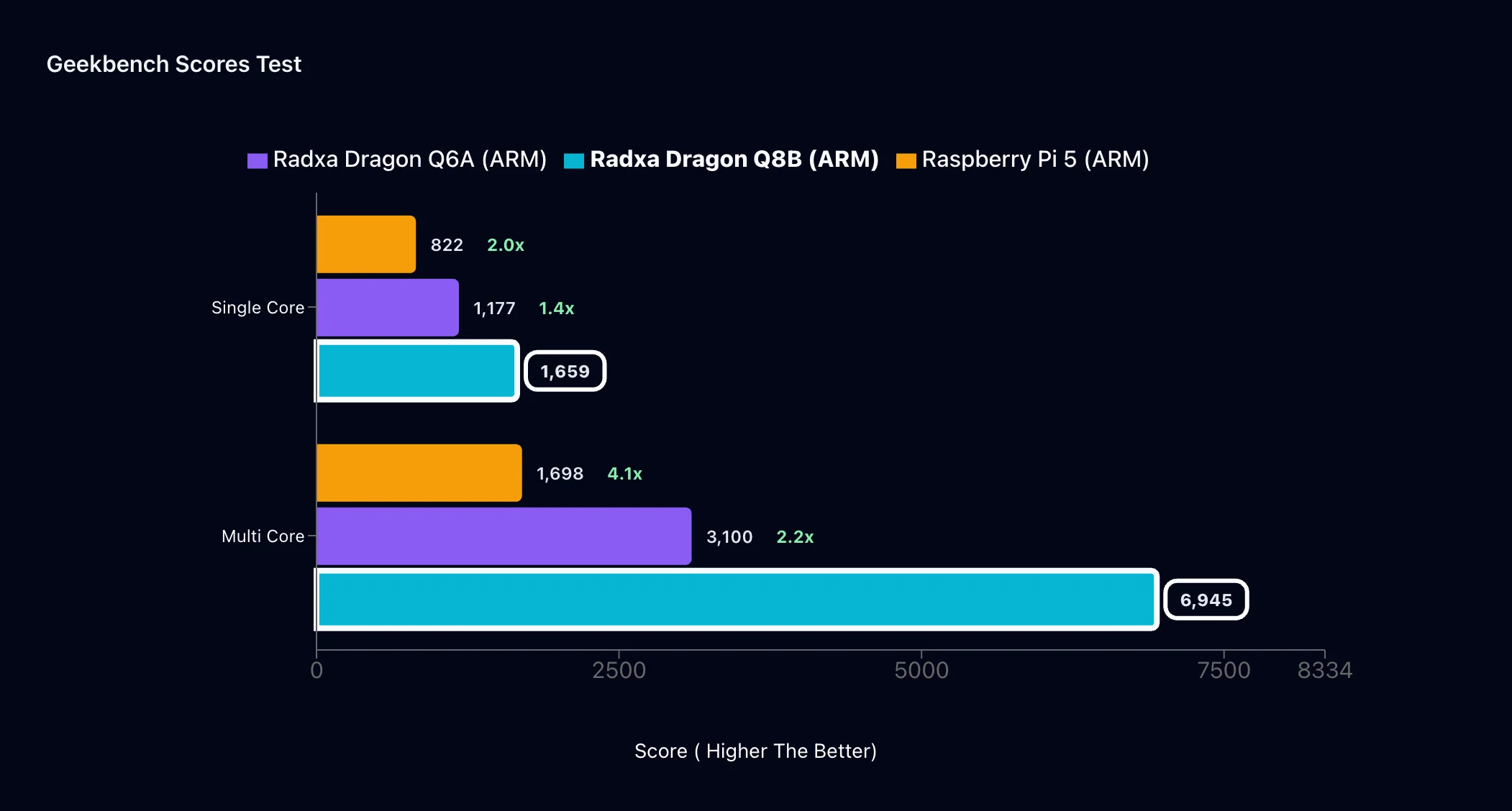
Geekbench Scores : here
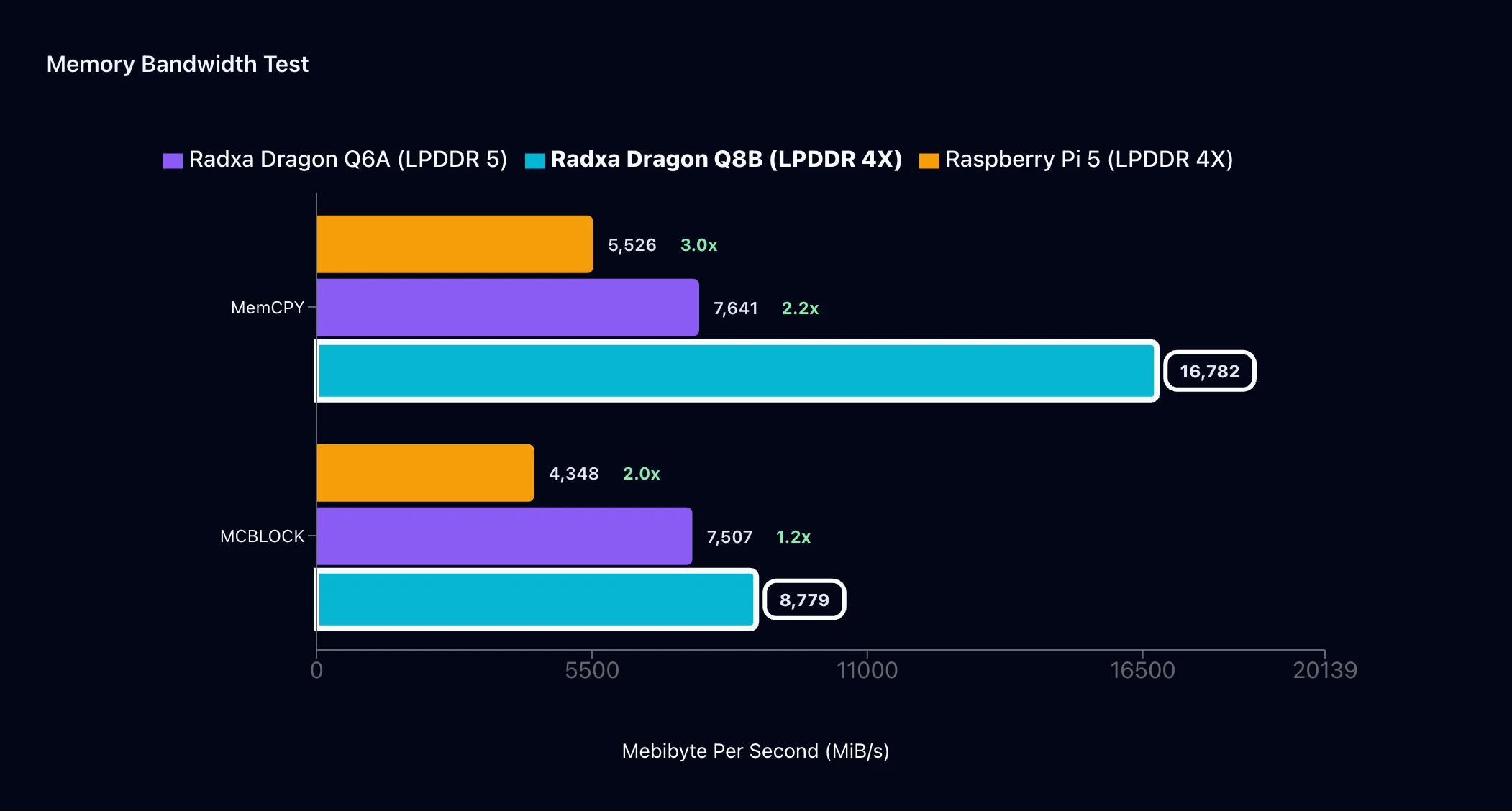
- Memory Bandwidth: The 128-bit LPDDR4X RAM peaked at 16,700 MiB/s for memory copies and 8,700 MiB/s for block copies.
Cool Temperatures & Low Power Consumption
Despite all this power, the board stays remarkably cool and energy-efficient.
-
Temperatures: Idles at a chilly 36°C. After 10 minutes of stress testing, it never peaked above 54°C thanks to the included heatsink and fan.
-
Power Draw: Consumes just 4 Watts at idle. Under maximum Geekbench load, it peaked at only 20 Watts.
Storage & Transfer Speeds
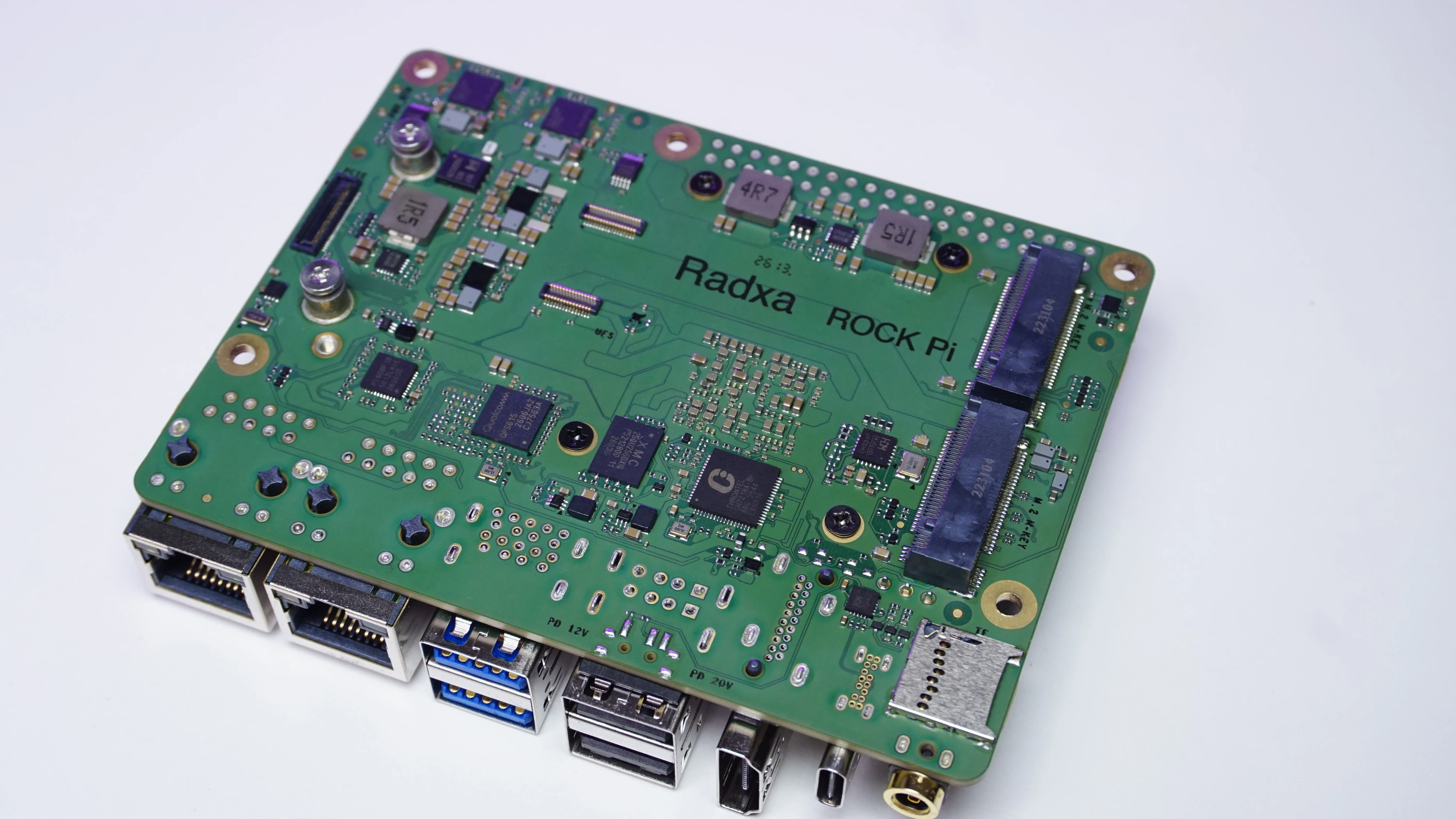
Having dual M.2 NVMe slots is an absolute game-changer for homelab servers. Here are the read speeds you can expect:
-
NVMe Slot 1 (Gen3 x4): ~2,800 MB/s.
-
NVMe Slot 2 (Gen3 x2): ~1,300 MB/s.
-
PCIe FPC Connector (via NVMe HAT): ~721 MB/s.
-
USB 3.2 Gen 2 (via USB-to-NVMe adapter): ~880 MB/s write speeds (copied 53GB in under 60 seconds).
Next-Level Local AI & Home Assistant
If you are running smart home setups or local LLMs, this SBC is a powerhouse.
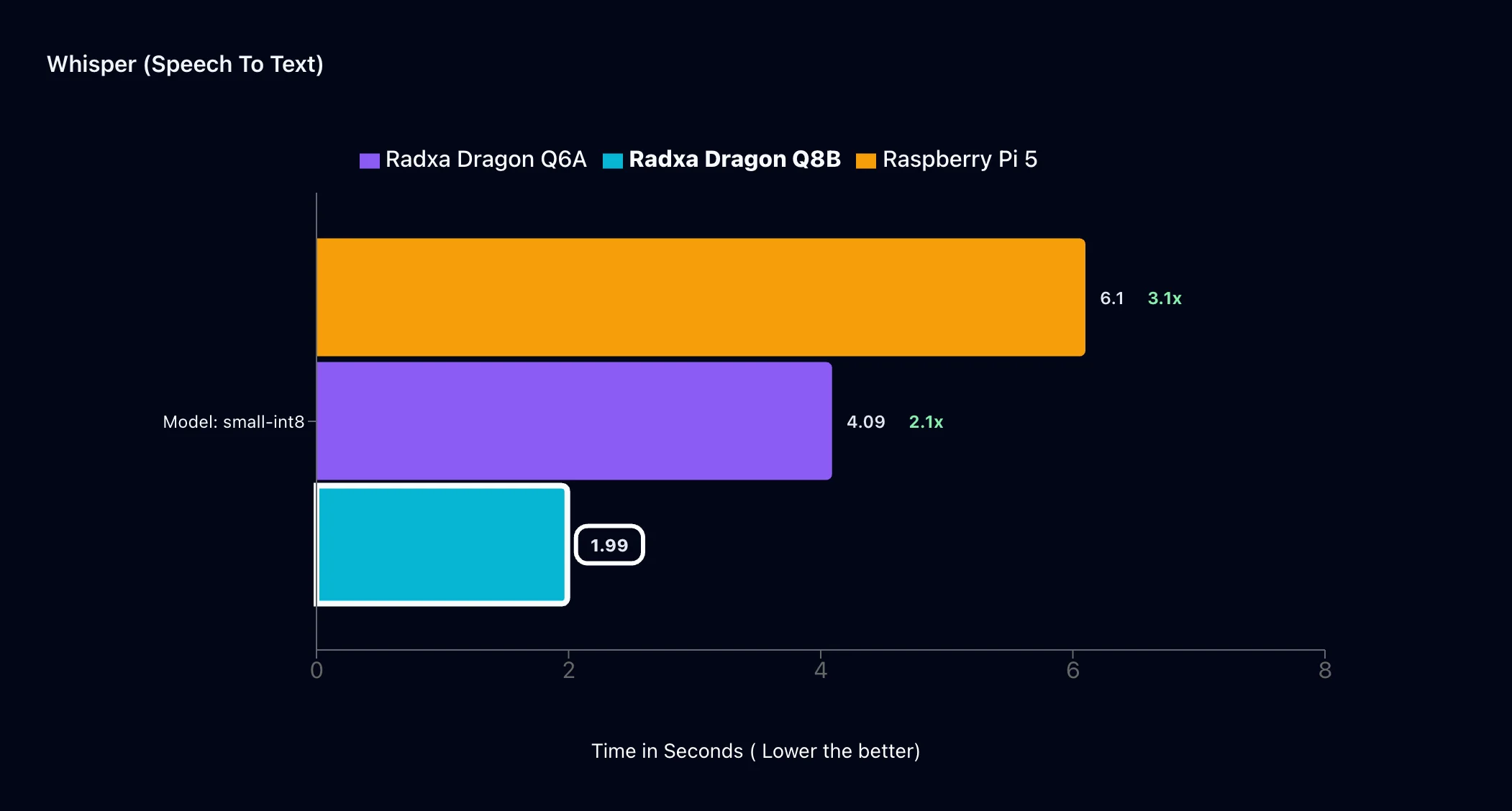
- Home Assistant (Docker): Using the Whisper small-int8 model for local voice assistance, speech-to-text converted in under 2 seconds.
-
Ollama (Raw CPU): Running the Gemma 4B (12B parameter) model on raw CPU power gave 19 tokens/sec for prompt evaluation and 3.5 tokens/sec for generation.
-
Qualcomm NPU (29 TOPS): Radxa provides a guide to run the Llama 3.2 1B model via the NPU using Alibaba's ModelScope. The results? A massive 264 tokens/sec prompt processing rate and 21 tokens/sec generation rate.
Final Verdict: Should You Buy It?
I am incredibly impressed by the overall performance of this board.
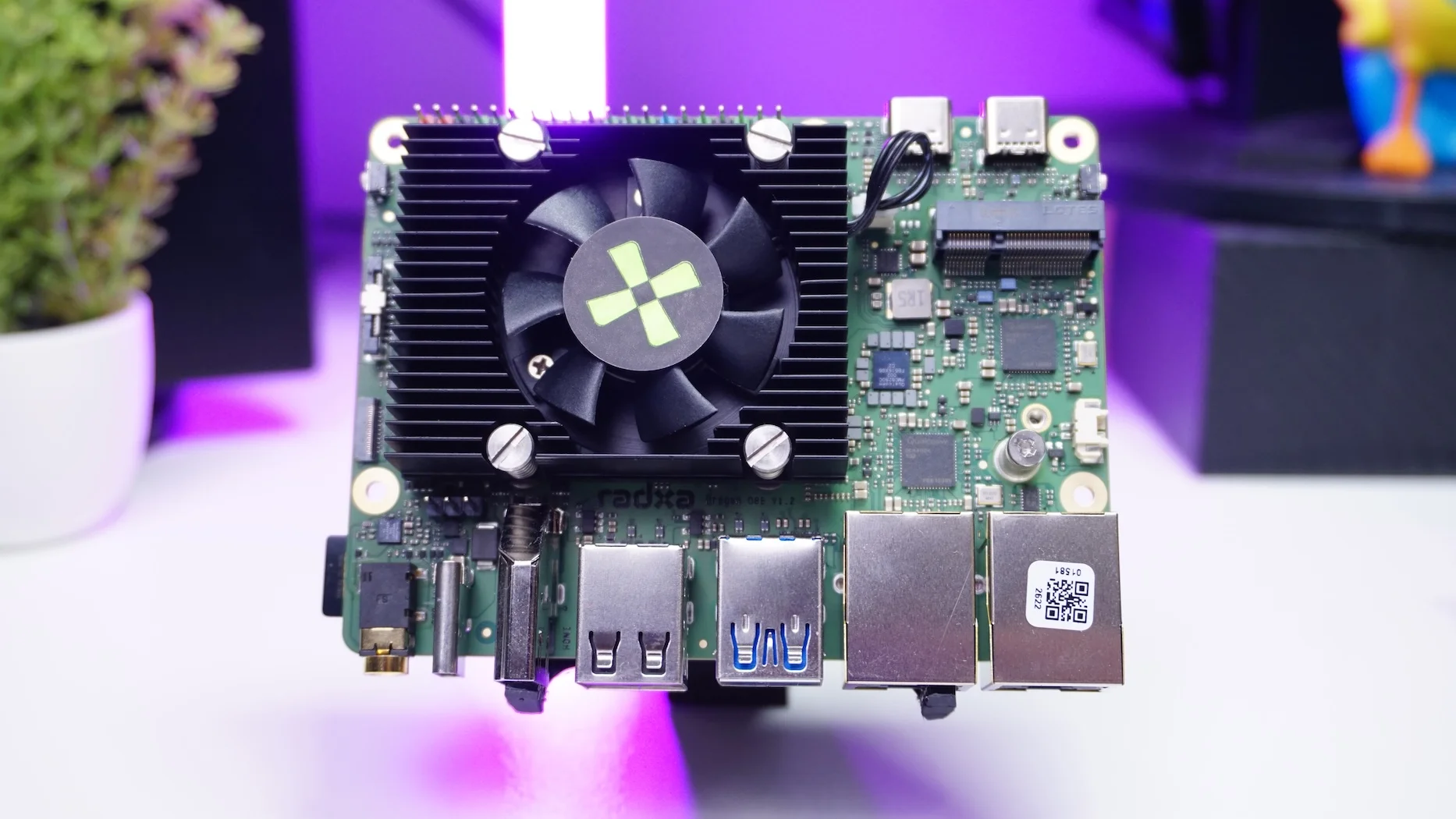
If you are debating buying a 16GB Raspberry Pi 5 (which will cost you around €300), you should seriously consider the Radxa Dragon Q8B instead. For roughly €290 on Arace (or ~€380 on AliExpress) for the 16GB RAM variant, you get dual NVMe slots, dual 2.5GbE networking, and a built-in AI NPU that absolutely crushes edge computing tasks.
Buy Radxa Dragon Q8B: